The Four Seasons and Japanese Food Culture
One of the most distinctive features of Japanese culture is the close connection between the four seasons and food. In Japan, people value eating seasonal ingredients when they are at their freshest and most delicious. This concept is called “shun” (旬), which refers to the time when an ingredient has its best flavor and highest nutritional value.
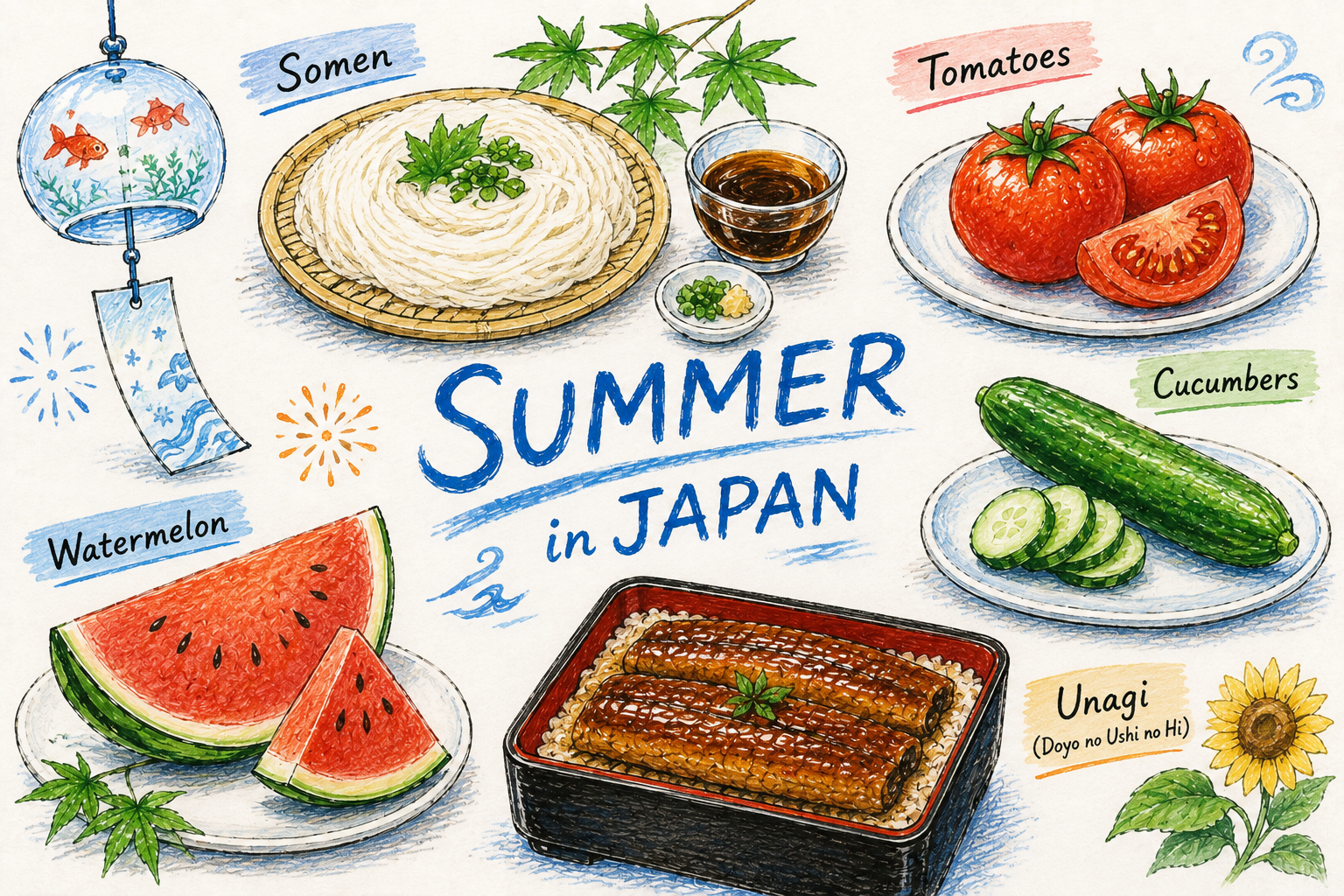
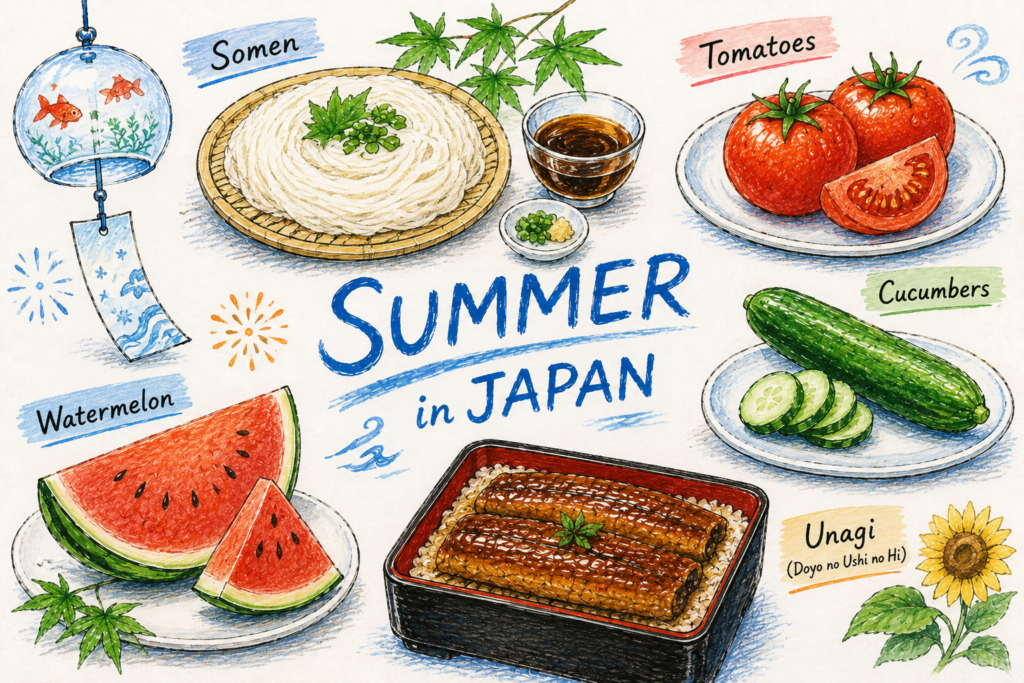
In summer, light and refreshing foods such as somen noodles, tomatoes, cucumbers, and watermelon are especially popular. There is also a custom of eating eel on the “Day of the Ox”(土用の丑の日: Doyo no Ushi no Hi) during the midsummer period, as it is traditionally believed to help people stay healthy and energetic through the hot season.
Japanese cuisine is not simply about enjoying delicious food. It also reflects an appreciation for nature, the changing seasons, and the connections shared with family and others. By enjoying seasonal ingredients, people can experience the beauty of Japan’s four seasons at the dining table throughout the year.
Comments