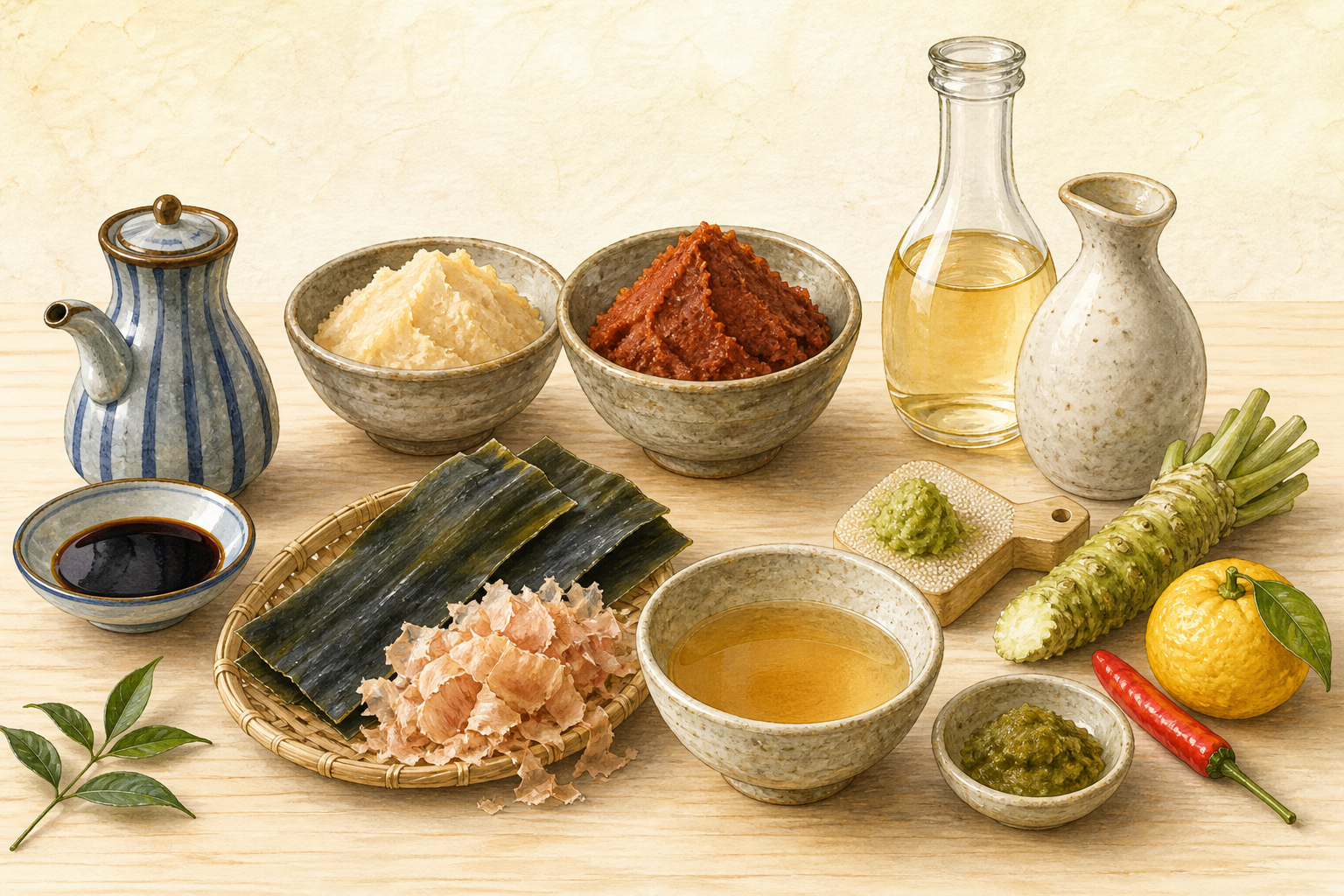
Japanese food is loved around the world for its delicate flavors and beautiful presentation. But what gives Japanese cuisine its distinctive taste?
The answer often lies in its seasonings and other essential ingredients. From savory soy sauce and rich miso to aromatic dashi, these ingredients play an important role in everyday Japanese cooking.
Here are some of the most popular Japanese seasonings and flavor essentials you should know.
Soy Sauce (Shoyu)
Soy sauce is one of the most essential seasonings in Japanese cuisine. It has a salty, savory flavor and is used in a wide variety of dishes.
You may know it as a dipping sauce for sushi and sashimi, but it is also used to season grilled fish, vegetables, soups, sauces, and simmered dishes.
There are several types of Japanese soy sauce. Koikuchi, a dark-colored soy sauce, is the most widely used variety. Usukuchi has a lighter color but is generally saltier and is often used when cooks want to preserve the natural color of ingredients. The flavor and style of soy sauce can also vary by region.
Miso
Miso is a traditional Japanese paste made by fermenting soybeans with salt and koji, a fermentation culture usually produced from rice, barley, or soybeans. It has a rich, savory taste known as umami.
The best-known dish made with miso is miso soup, but miso can also be used to season meat, fish, vegetables, noodles, and sauces.
Many varieties are available. White miso is generally sweeter and milder, while red miso tends to have a deeper, stronger flavor.
Mirin
Mirin is a sweet, rice-based cooking wine commonly used in Japanese cuisine. It adds gentle sweetness, balances salty flavors, and gives sauces an attractive glossy finish.
Mirin is often used in dishes such as teriyaki chicken, simmered fish, and Japanese-style sauces. It is frequently combined with soy sauce to create the sweet and savory flavor found in many popular Japanese dishes.
Traditional hon-mirin contains alcohol, while mirin-style seasonings may contain little or no alcohol.
Rice Vinegar
Japanese rice vinegar generally has a milder and slightly sweeter taste than distilled white vinegar.
It is an essential ingredient in sushi rice and is also used in salads, pickled vegetables, dressings, and refreshing side dishes.
Its gentle acidity helps balance rich or oily foods without overpowering the other ingredients.
Dashi
Dashi is a Japanese soup stock rather than a seasoning, but it is one of the most important foundations of Japanese cooking.
Traditional dashi is commonly made from ingredients such as kombu, or dried kelp, and katsuobushi, or dried bonito flakes. Other varieties may use dried sardines or shiitake mushrooms.
Dashi is used in miso soup, noodle dishes, simmered foods, and many other Japanese recipes. It adds deep umami without making a dish feel heavy.
Wasabi and Yuzu Kosho
Japanese cuisine also includes distinctive condiments that add heat and aroma.
Wasabi is known for its sharp, pungent heat and is commonly served with sushi and sashimi.
Yuzu kosho is a paste made primarily from chili peppers, salt, and aromatic yuzu peel. It has a spicy, salty, and refreshing citrus flavor. It is often enjoyed with grilled meat, chicken, hot pot dishes, and noodles.
Bring the Taste of Japan to Your Kitchen
Japanese seasonings may seem simple, but they can create surprisingly complex flavors. By combining ingredients such as soy sauce, miso, mirin, rice vinegar, and dashi, you can recreate the comforting taste of Japanese home cooking almost anywhere in the world.
If you are interested in Japanese food, why not begin by trying one new Japanese seasoning? Even a single ingredient can bring greater variety and depth to your everyday cooking.

Comments